For over a decade, "Flat Design" has been the undisputed king of digital interfaces. Driven by the need for fast load times and clean, responsive layouts, designers stripped away drop shadows, bevels, and textures in favor of solid colors and crisp, vector edges.
It was clean. It was functional. But eventually, it became a bit boring.
Today, we are witnessing a fascinating evolution: the strategic reintroduction of 3D elements into otherwise flat UI designs. This isn't a return to the heavy, literal skeuomorphism of the early 2000s (we aren't making digital bookshelves look like real wood anymore).
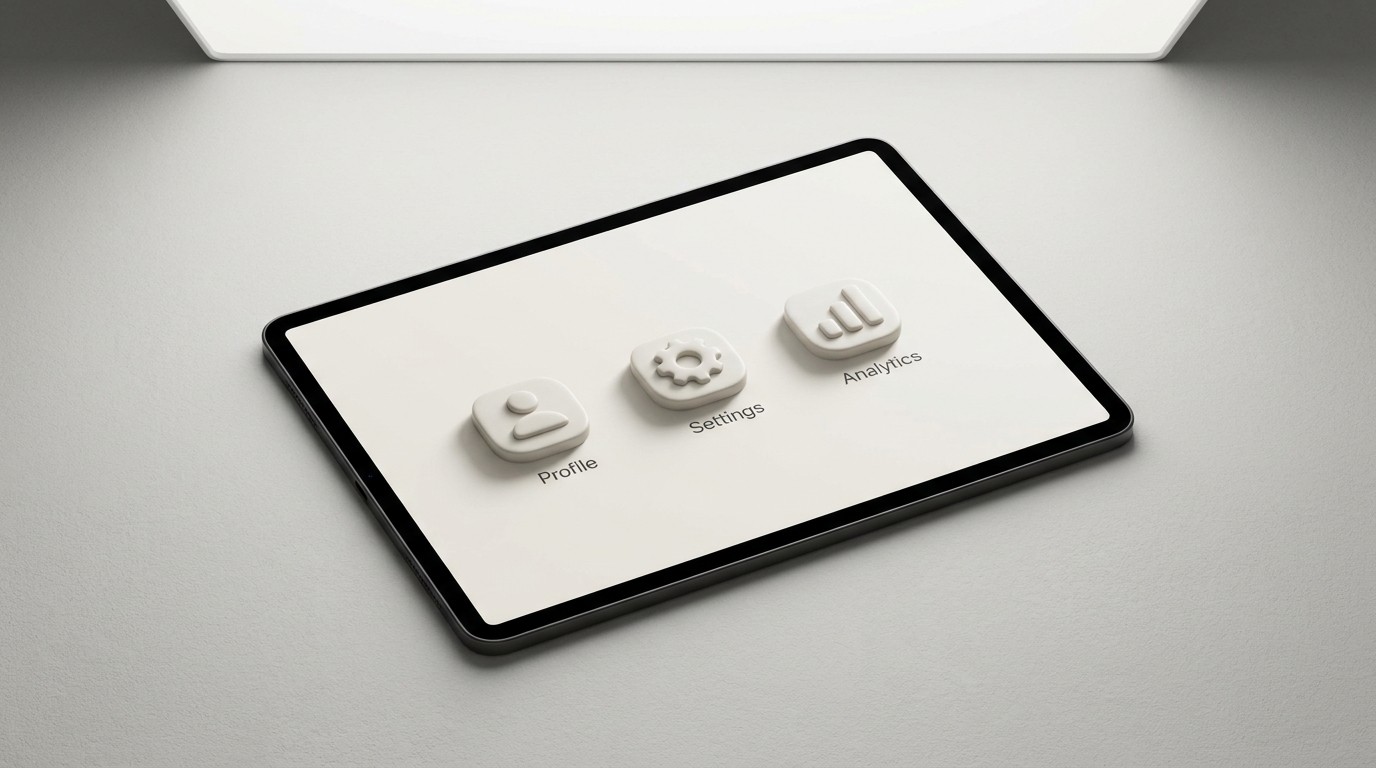
Instead, this is a sophisticated hybrid approach. Designers are using subtle 3D icons, soft volumetric gradients, and extruded shapes to add depth, tactility, and a modern, premium feel, all without cluttering the clean aesthetic of flat design.
Why 3D is Bleeding into UI
The resurgence of 3D is driven by several factors:
Technological Advancements: Browsers and devices are vastly more powerful. Technologies like WebGL and libraries like React Three Fiber make it possible to render real-time 3D graphics in a browser without crashing the user's computer.
The Need for Tactility: As our lives become increasingly digital, users crave a sense of physical interaction. A 3D button that looks like a soft piece of silicone feels more satisfying to click than a flat, colored rectangle.
Visual Differentiation: When every SaaS dashboard looks exactly the same, adding custom 3D iconography is a rapid way to elevate brand perception and stand out from the generic flat-vector crowd.
How to Subtly Incorporate 3D (Without Ruining the UI)
The key to this aesthetic is restraint. If you make everything 3D, the interface becomes chaotic and overwhelming. You must use 3D elements specifically as accents.
1. The "Claymorphism" Aesthetic
One of the most popular current trends is often referred to as "Claymorphism." This involves creating 3D objects that look like they are molded from smooth, matte clay.
Characteristics: Soft, rounded edges; pastel or highly desaturated colors; double inner shadows to create a fluffy, extruded look.
Application: Excellent for primary call-to-action buttons, key feature icons, or empty state illustrations. It feels friendly, approachable, and highly modern.
2. 3D Iconography as Focal Points
Replace your flat, line-art vector icons with 3D renders.
Imagine a pricing page. Instead of a flat star icon for the "Pro" tier, use a glossy, slowly rotating 3D star. It immediately draws the eye and signals higher value.
The Rule of Consistency: If you use a 3D icon for one key feature, you must use 3D icons for the other parallel features in that section. Do not mix flat line-icons and 3D renders in the same immediate group.
3. Glassmorphism and Volumetric Lighting
While not strictly 3D modeling, applying 3D lighting principles to flat shapes creates massive depth.
Glassmorphism involves creating panels that look like frosted glass floating above the background, blurring the content beneath them. Combine this with volumetric lighting—where a soft, colorful glow appears to emanate from behind an object—to create a deep, layered interface that still technically functions on a 2D plane.
Tools for the Modern UI Designer
You no longer need to spend years mastering complex software like Maya or Cinema4D to create these elements.
Spline: A 3D design tool built specifically for web and UI designers. It works in the browser and feels remarkably similar to Figma, making it incredibly accessible for 2D designers looking to add depth.
Blender: The industry standard for accessible 3D modeling. It has a steeper learning curve but offers infinite possibilities for custom rendering.
Pre-made 3D Libraries: Sites like UI8 or Khroma offer massive libraries of pre-rendered, highly customizable 3D icons (often in Figma-ready formats) that you can simply drag and drop into your designs.
Flat design provided the structural discipline we needed. Now, by carefully reintroducing 3D elements, we can add the soul, depth, and tactility that digital experiences have been missing.