The traditional freelance design model is inherently unscalable.
You spend hours writing custom proposals. You negotiate scope creep. You manage unpredictable timelines because clients take three weeks to provide feedback. Every single project is a custom, bespoke invention, which means your income is directly tied to the maximum number of chaotic hours you can work in a week.
Eventually, you will hit an income ceiling, and shortly after that, you will hit burnout.
If you want to scale your design business without necessarily hiring a massive agency team, you need to stop selling custom services and start selling Productized Services.
What is a Productized Service?
A productized service takes a specific design skill and packages it like a physical product off a shelf. It has a fixed price, a fixed scope, and a fixed timeline.
Instead of saying, "I design websites, let's talk about what you need," you say, "I offer a 'Website in a Week' package for $5,000. It includes exactly a 5-page Webflow site, delivered next Friday."
By productizing, you remove the guesswork for both yourself and the client.
The Benefits of Productization
Zero Proposal Writing: Because the scope and price are fixed and publicly listed on your website, you never write a custom proposal again. A client simply clicks "Buy Now" or books a kickoff call to pay the deposit.
Streamlined Workflow: When you do the exact same type of project repeatedly, you develop hyper-efficient systems. You can create Notion templates, automated email sequences, and pre-built design libraries specifically for that service.
Better Clients: Productized services attract clients who value speed and clarity over micromanagement. They know exactly what they are getting and when.
How to Build Your First Productized Service
You cannot productize everything. A massive, complex enterprise software redesign cannot be productized. You must find a specific, repeatable pain point.
Step 1: Identify the Repeatable Problem
Look at your past projects. What is the one thing clients consistently ask for that you can execute quickly and confidently?
Instead of "Branding," offer a "One-Day Brand Audit and Refresh."
Instead of "UX Consulting," offer a "50-Point Landing Page Teardown."
Instead of "Web Design," offer a "Standardized Shopify Theme Setup."
Step 2: Define the Constraints (Be Ruthless)
The success of a productized service relies entirely on your ability to say "No" to scope creep. You must clearly define what is not included.
If you offer a "Website in a Week," the constraints must state:
Client must provide all copy and photography before day 1.
Maximum of 5 pages.
Only 1 round of minor revisions on day 4.
No custom e-commerce or complex backend databases.
Step 3: Package and Price Visually
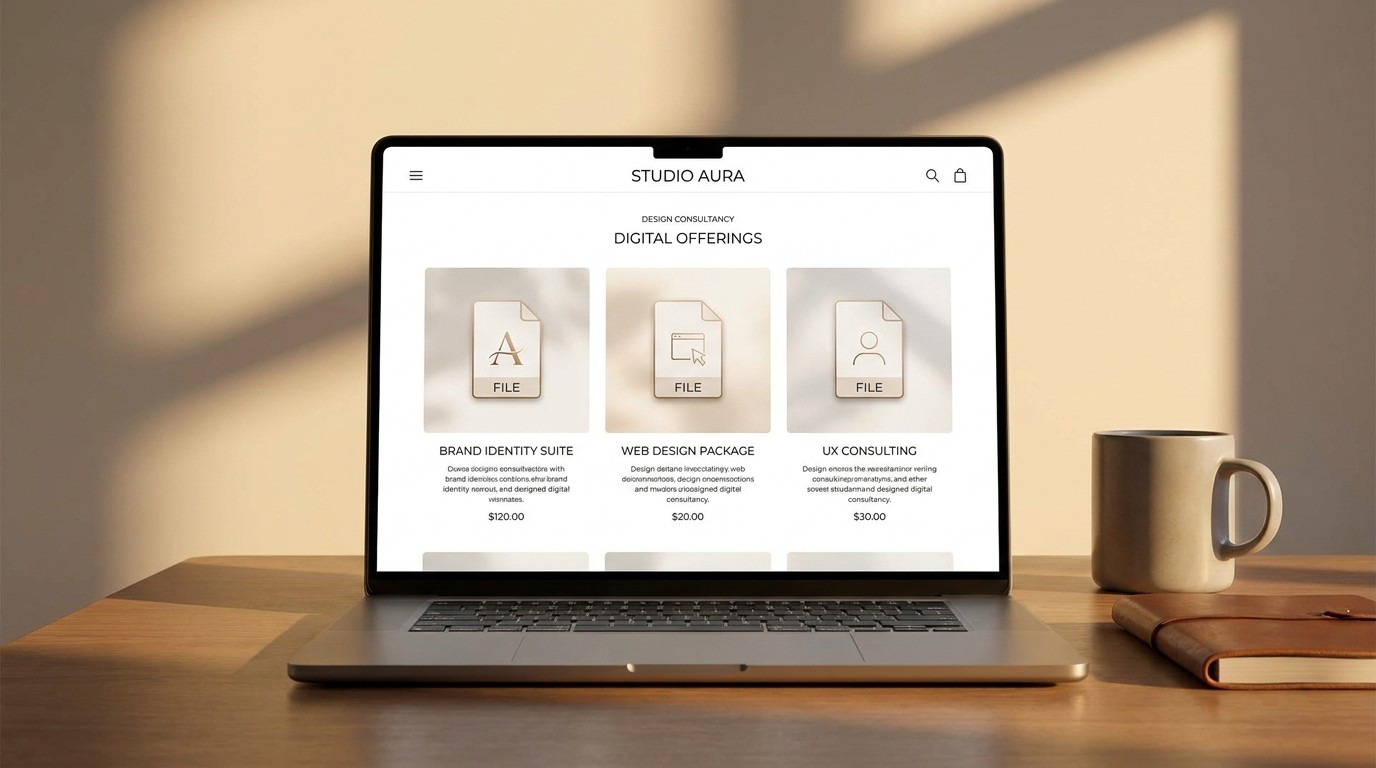
Create a dedicated landing page for the service. It should look like a software product pricing page.
Include:
A clear, bold name (e.g., The Design Sprint).
A specific price tag.
A timeline (e.g., Delivered in 48 hours).
A bulleted list of exact deliverables.
A clear "How it Works" 3-step process.
Step 4: Automate the Onboarding
When a client buys, the process should be heavily automated. Use tools like Typeform or fillable PDFs to gather their requirements immediately. Use Calendly to let them book their own kickoff call. The less manual admin you do, the higher your profit margin becomes.
Productizing your design service is the bridge between chaotic freelancing and running a scalable, predictable business. It allows you to become exceptionally fast at delivering a highly valuable specific result, freeing up your time while simultaneously increasing your effective hourly rate.